
The Indian real estate sector received a record equity capital inflow of Rs 14.25 billion last year, higher by 25 per cent annually, as developers and institutional investors remained bullish on growth potential, according to CBRE.
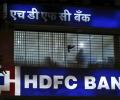
Sebi, RBI discuss monitoring foreign investors in real time after foreign shareholding cap breach in HDFC Bank on February 17

Among Sensex firms, Tata Motors, Bharat Electronics, UltraTech Cement, Tech Mahindra, Mahindra & Mahindra, ICICI Bank, Tata Consultancy Services and Axis Bank were the major laggards. However, Power Grid, Hindustan Unilever, NTPC and HCL Tech were among the gainers.
From the 30-Sensex firms, Tata Steel, Asian Paints, Trent, State Bank of India, Hindustan Unilever, UltraTech Cement, ICICI Bank and Bharti Airtel were among the gainers. On the other hand, Infosys, Bajaj Finance, Bharat Electronics, Larsen & Toubro and HDFC Bank were the laggards.

Bharat Electronics, Reliance Industries, Mahindra & Mahindra, Larsen & Toubro, InterGlobe Aviation, ICICI Bank and UltraTech Cement were among the other major gainers. Axis Bank, Infosys, Tata Consultancy Services, Trent and Titan were the laggards.

Budget will get a welcome reception from the international biz.

This Budget positions India's taxation ideology as not merely a revenue source but as a strategic catalyst for growth, inclusion and long-term confidence.

These sectors have underperformed the wider market over the past year and are seen having far more upside potential if the economy picks up thanks to Modi's reformist agenda.

Modest growth projections hits IT sector.

The Securities and Exchange Board of India (SEBI) slightly shortened the time period by which foreign investors must use up their government debt limits to ensure that all of the unused quotas are put on sale at each monthly auction.

The value of the rupee, which has slipped to the 92 per dollar mark, does not accurately reflect India's stellar economic fundamentals, the Economic Survey said on Thursday.

India was being evaluated for a potential weight of around 1 per cent in the index, an allocation that could have translated into $25 billion of inflows, spread over roughly 10 months.

Stock market sentiment is likely to remain optimistic going ahead, though some consolidation cannot be ruled out after the recent sharp rally in the benchmarks, analysts said. According to experts, the Nifty and Sensex could indeed move towards new record highs before the end of the year, if global cues stay supportive, crude oil prices remain benign and there is continued domestic earnings momentum.

India may adopt a "calibrated" and a "step-by-step" approach to easing norms on investments originating from China, Union Commerce and Industry Minister Piyush Goyal said on Tuesday. He was in a conversation with A K Bhattacharya on Day 1 of Business Standard's two-day annual event, Manthan 2026. The minister said foreign direct investment (FDI) from China was certainly not "banned", but it goes through an approval process. "The government's approach at the moment is to accelerate the approval process."

The proposals outlined in Budget 2026-27 represent a carefully crafted, multi-year strategy designed to strengthen India's big bets on the path to Viksit Bharat 2047, says Sameer Gupta.

Stock market benchmark indices Sensex and Nifty ended 2.5 per cent higher on Tuesday after India and the US agreed to a trade deal under which Washington will bring down the reciprocal tariff on Indian goods to 18 per cent.

Indians are at the top spot for international investment, both in terms of the number of investors and the amount of expenditure

From the 30-Sensex firms, NTPC, ICICI Bank, Adani Ports, Bharti Airtel, Sun Pharma and Bajaj Finance were among the biggest laggards. However, Asian Paints, HCL Tech, Bharat Electronics and Reliance Industries were among the gainers.

The finance minister said that consolidation of state-owned banks could proceed at any time without waiting for the recommendations of the proposed high-level committee on banking.

Among Sensex firms, ITC, Bharti Airtel, Trent, Bajaj Finserv, Titan and Reliance Industries were the major laggards. However, UltraTech Cement, Adani Ports, Tata Motors, Bharat Electronics, Bajaj Finance and Hindustan Unilever were among the major gainers.

Prime Minister Narendra Modi is promoting India as a global hub for digital infrastructure and artificial intelligence, highlighting the government's incentives for data center investments and inviting the world's data to reside in India.

The rupee witnessed its worst single-day decline in around two months since November 21, 2025, due to demand for dollars among importers, said dealers. The maturing short positions in the non-deliverable forwards market further weighed on the local currency.

'...a mix of asset classes.' 'Include equities for growth (across market caps), debt for stability and liquidity, gold as a hedge against macro and currency risk, and global assets for geographical and economic diversification.'
From the 30-Sensex firms, Bharat Electronics surged nearly 9 per cent post its December quarter earnings. Eternal, Bajaj Finance, Power Grid, Trent, Mahindra & Mahindra and UltraTech Cement were the other major gainers. Maruti, Sun Pharma, Infosys and Bharti Airtel were among the other laggards.

'Large firms and their interests can dominate the narrative, even as smaller stakeholders and retail investors struggle to be heard.' 'Regulators therefore require deep subject-matter expertise to assess representations, recognise underlying incentives, incorporate the perspectives of less-visible stakeholders, and guard against bias or capture,' notes Ananth Narayan.

Foreign investors are preferring to access the Indian market through the sub-account route rather than coming in as foreign institutional investors (FIIs), thanks to stricter regulatory norms and tax-related concerns related to the proposed general anti-avoidance rules (GAAR).

E-commerce giant Amazon plans to make a mega-investment of $35 billion, over Rs 3.14 lakh crore, in India by 2030 across its businesses with a focus on AI-driven digitization, export growth and job creation, a senior company official said on Wednesday.

Enforcement agencies have highlighted risks related to money laundering and terror financing, prompting closer scrutiny of crypto platforms operating in India.

Gold has emerged as the most stable asset during episodes of geopolitical stress, and crude oil has been more sensitive than others when it comes to regional conflicts and sanctions, according to a report in the Reserve Bank of India's (RBI's) monthly bulletin. Silver and the United States Treasury have showed moderate reactions.

The government has circulated among members ofParliament a new draft of the Amendment of Insurance laws Bill, 2025, proposing stricter safeguards on the utilisation of life insurance funds and other specified insurance business funds, particularly for dividend payouts, bonuses, and servicing of debentures.

The Indian rupee, swaying through multiple headwinds, tiding over global trade disruptions and massive foreign fund outlfows, is unlikely to arrest its descent until tariff impact overhangs, notwithstanding robust domestic macroeconomic tailwinds. The Reserve Bank of India (RBI), which sees the rupee's depreciation as a silver bullet to offset the tariff shock, expects the currency to find its stable course once India reaches a trade deal with its largest trading partner, the US.

Whatever the critics may say, the numbers suggest that India continues to be a favourite destination for foreign investors.

Domestic equities surged on Tuesday, posting their best single-day gains in more than eight months after a long-awaited trade deal between India and the US. The deal, which lowered tariffs on Indian goods to 18 per cent from 50 per cent, significantly improved investor sentiment and lifted a key overhang for the market.

Investors must account for currency depreciation in their financial plans and use instruments that can cushion the erosion in purchasing power.
Benchmark equity indices Sensex and Nifty rebounded on Thursday after three sessions of losses, tracking gains in global markets after US President Donald Trump struck a conciliatory tone on Greenland. In a volatile session, the 30-share BSE Sensex climbed 397.74 points, or 0.49 per cent, to close at 82,307.37.

In an event-heavy week, stock investors will track ongoing quarterly earnings, the US Federal Reserve's interest rate decision, and macroeconomic data for market direction, analysts said. Moreover, progress in India-US trade negotiations will remain a key focus for investors, an expert said.

Domestic mutual funds have infused the highest ever -- Rs 4.84 trillion -- this year amid strong inflows via SIPs.

Mutual fund investment through systematic investment plans (SIPs) has surged to an all-time high of Rs 3.34 lakh crore in 2025, driven by growing investor appetite for disciplined, long-term wealth creation.

'Retail portfolios were going nowhere even as headline indices moved higher, prompting investors to sell holdings and shift money to IPOs, attracted by listing-day gains.'

MAT has damaged investor confidence
 © 2026 Rediff.com - Advertise with us - Disclaimer - Privacy Policy - Sitemap - Feedback - About us - Terms of use - Grievances